
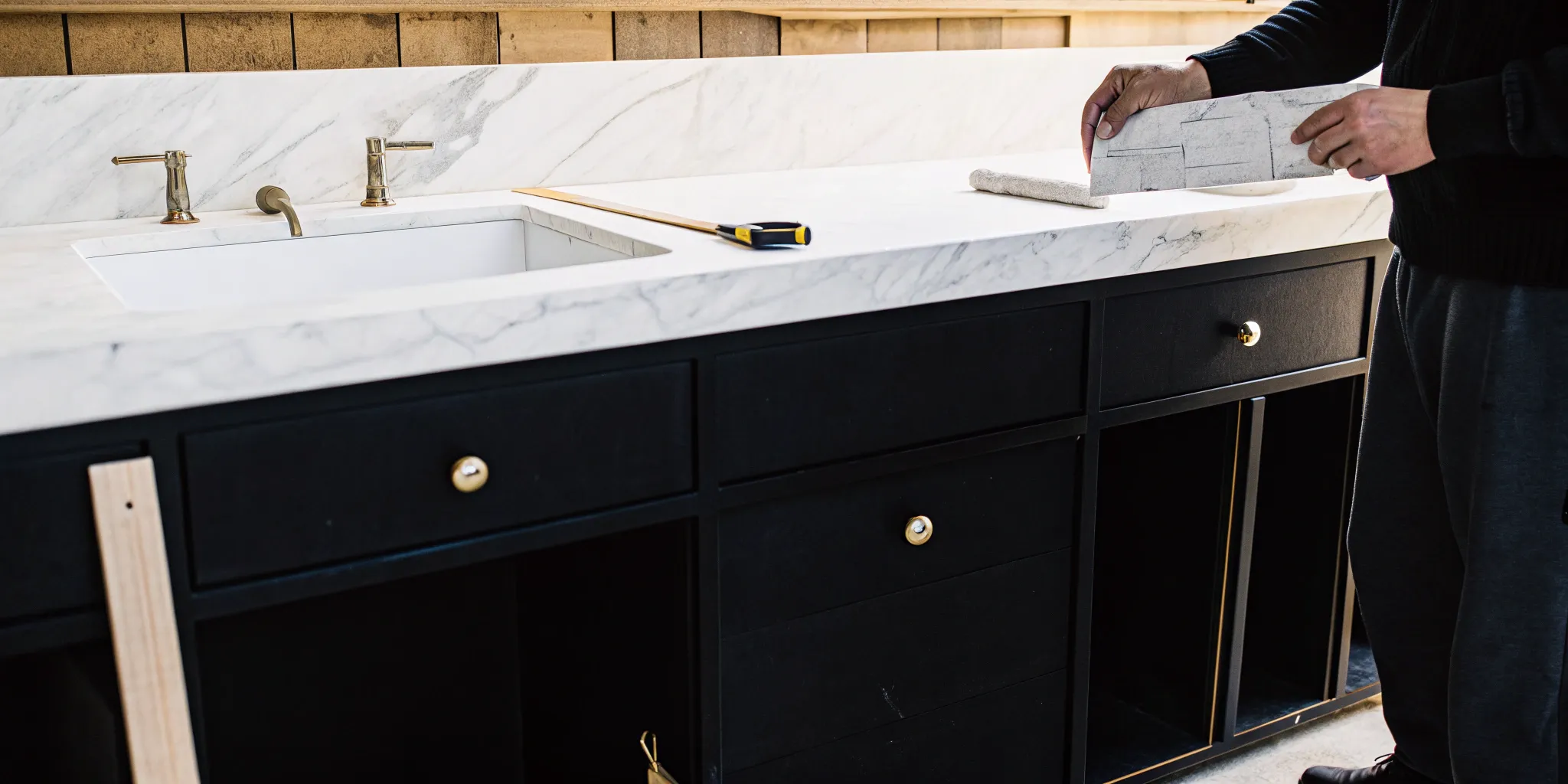
The small details are what make a kitchen feel truly custom, and one of the most overlooked spots is the back of the island. It’s a prime piece of design real estate that can either be an afterthought or a stunning feature. This is your chance to add texture, color, and personality. A thoughtfully designed island back panel can completely transform your space. This isn’t just about covering plywood; it’s about creating a polished, built-in look. Our guide breaks down the installation process, helping you achieve that high-end finish that defines quality craftsmanship.
Key Takeaways
- Prioritize Function for a Safe, Stylish Island: Remember that a back panel does more than just look good; its main purpose is to provide essential structural support that keeps your island stable and safe for daily use.
- Achieve a Custom Fit with Smart Prep Work: The secret to a seamless, built-in look is in the preparation. Scribing the panel to match an uneven floor and adding furring strips for a solid base are the steps that create a professional result.
- Complete Your Project with Polished Details: Don’t stop once the panel is attached. Taking the time to fill nail holes, choose a durable paint or stain, and add trim is what transforms the island into a truly finished piece of furniture.
What’s a Kitchen Island Back Panel (And Why You Need One)
When you picture your dream kitchen island, you probably think about the countertop, the seating, and the cabinet style. But there’s another component that’s just as important: the back panel. This is the finished side of the island that typically faces your living or dining area. It might seem like a minor detail, but the back panel plays a huge role in both the safety and the style of your kitchen.
A well-chosen and properly installed back panel does more than just cover up the unfinished backs of your cabinets. It provides critical structural support and acts as a major design element that can tie your entire space together. Whether you’re planning a full kitchen remodel or just upgrading your current island, understanding the function of the back panel is key to getting a result that is both beautiful and built to last.
Protect Your Island from Scuffs and Kicks
First and foremost, a kitchen island back panel is a crucial safety feature. Its main structural job is to help secure the island to the floor, preventing it from tipping or shifting. An island that isn’t properly anchored can be a serious hazard, especially in a busy home with kids and pets. The back panel provides the rigidity and stability needed to create a solid, unmovable fixture in your kitchen. Think of it as the backbone of your island—it connects all the cabinet boxes and gives the entire unit its strength, ensuring it can withstand daily use for years to come.
Tie Your Kitchen Design Together
Beyond its structural duties, the back panel is a fantastic design opportunity. In open-concept homes, the back of the island is highly visible and serves as a focal point. Leaving it as an afterthought can make your kitchen feel unfinished. A thoughtfully designed back panel, however, can elevate the entire room. You can match it to your cabinetry for a seamless look or use a contrasting material like shiplap, beadboard, or decorative tile to add texture and personality. It’s the perfect place to make a statement and truly integrate your island into your home’s overall aesthetic. You can see some great examples in our project gallery.
So, Is an Island Back Panel Really Necessary?
Yes, absolutely. A sturdy back panel is non-negotiable for a safe and durable kitchen island. Simply tacking a thin, flimsy piece of paneling onto the back of the cabinets won’t provide the necessary support. A proper installation involves using a thick, substantial backer board that can be securely fastened to the cabinets and the floor. This creates the solid structure your island needs to be stable. Skipping this step or using inadequate materials can compromise the integrity of your island, leading to wobbling and potential safety issues down the road. It’s a foundational element that ensures your investment is sound.
Get Your Tools and Materials Ready
Before you start any project, it’s essential to get organized. Having all your materials and tools ready to go will make the installation process much smoother and more enjoyable. Think of it as your own version of a chef’s mise en place—everything in its right place. A little prep work upfront saves you from making frantic trips to the hardware store mid-project. This is a crucial step we take on every home renovation to ensure efficiency and a high-quality result. By gathering everything you need first, you can focus all your energy on getting the installation just right.
From Shiplap to Beadboard: Choosing Your Material
The material you choose for your back panel sets the tone for your entire kitchen island. Plywood and wainscoting are both excellent options because they are sturdy and offer a clean, polished look. Plywood provides a smooth, modern surface that’s perfect for painting, while wainscoting or beadboard can add texture and a more traditional or farmhouse feel. Consider the overall style of your kitchen remodeling project when making your choice. You want the back panel to feel like a natural extension of your existing cabinetry, not an afterthought.
Exploring Wood Styles
If you want to add warmth and character, wood is a fantastic choice. You can go beyond a simple flat panel by incorporating decorative styles. For instance, a Board and Batten look, created with wide boards and narrower vertical strips, adds depth and a clean, paneled effect that works beautifully in modern farmhouse or transitional kitchens. Another popular option is beadboard, which features distinctive vertical grooves. This style can give your island a classic, cottage-inspired feel, adding a touch of charm and texture. Both options are paintable, allowing you to either match your existing cabinets or create a bold, contrasting accent color for your island.
Using Stone, Brick, and Other Textures
For a more dramatic and textured statement, consider materials like stone or brick. Using real stone can create a truly high-end, rugged look that connects your kitchen to natural elements, especially if you have a stone fireplace nearby. However, if you’re looking for a similar aesthetic with a simpler installation process, faux stone or brick panels are an excellent alternative. These panels are much lighter and easier to work with but still provide that rich, textured appearance. This approach allows you to introduce a powerful design element that makes the island a true centerpiece of your kitchen design.
Considering Repurposed and Functional Options
Don’t be afraid to think outside the box for a truly unique island. Repurposing materials like a salvaged door or reclaimed wood can add a one-of-a-kind rustic charm and a great story to your kitchen. Beyond aesthetics, you can also build in functionality. Integrating a bookshelf into the back of the island is a brilliant way to add extra storage for cookbooks or display space for decorative items. This turns the island into a multi-functional piece of furniture that is both practical and stylish, reflecting a thoughtful approach to your home’s design. Custom features like these are where professional design and build services can really shine.
DIY vs. Pre-Made Panels
Once you’ve decided on a material, you have another choice to make: will you create the back panel yourself or order a pre-made one? A DIY approach using materials like plywood or shiplap gives you complete creative control and can be a great way to add a unique touch. On the other hand, ordering a pre-made panel directly from a cabinet manufacturer ensures a perfect match in color and style to your existing cabinetry. This option is fantastic for achieving a seamless, integrated look with less guesswork. Think of it as the difference between a custom-tailored suit and a beautifully made off-the-rack option—both can be excellent, but they serve different needs and require different levels of effort.
Understanding Pre-Made Panel Specifications
If you opt for a pre-made panel, it’s helpful to know what you’re getting. These aren’t just simple sheets of wood; they are specifically designed to cover the back of your island and provide a polished, finished look. Manufacturers offer these panels in a wide variety of materials and finishes, allowing you to perfectly complement the rest of your kitchen. Whether your cabinets are a classic white shaker or a modern dark wood, you can find a panel to match. This level of customization is key to making your island feel like an intentional part of your home’s design, enhancing the overall aesthetic and value of your space.
What to Expect When Ordering Pre-Made Panels
When you order a pre-made panel, you’ll find they are quite flexible. While standard sizes are available, many suppliers allow you to specify the exact width and height you need for a tailored fit. This customization is crucial for accommodating islands of all shapes and sizes. It’s also important to know that these panels are typically shipped separately from the cabinets and will require attachment during installation. This means you’ll need the right tools and a solid plan to secure the panel properly. Ensuring it’s attached correctly is essential not just for looks but for the structural integrity of the entire island, guaranteeing it remains stable and secure for years to come.
Essential Tools for the Job
Having the right tools for the job is non-negotiable. You don’t need a professional workshop, but a few key items will make a world of difference. Here’s a basic list of what you’ll likely need: a reliable drill for securing the panel, clamps to hold it steady while the glue sets, and strong wood glue. For making precise cuts, a track saw or table saw is ideal. You might also need a jigsaw for cutting around outlets and a hand planer or belt sander to smooth out any rough edges for a perfect, seamless fit.
Safety First: Your Essential Gear
This might be the most important step of all. Please don’t skip the safety gear! It only takes a second for an accident to happen. At a minimum, you should have safety goggles to protect your eyes from dust and debris and a good pair of work gloves to prevent splinters and cuts. If you’re working with heavy panels, remember to lift with your legs, not your back, to avoid strain. Our team at THP Builders prioritizes safety on every job site, and you should too, even in your own home.
How to Install Your Kitchen Island Back Panel
Giving your kitchen island a finished back panel is one of those details that completely transforms the space. It takes the island from a collection of cabinets to a beautiful, solid piece of furniture. While it might seem like a job reserved for the pros, installing a back panel is a very achievable project if you’re patient and precise. A proper installation is a key element in any high-quality kitchen remodeling project, ensuring your island looks intentional and polished from every angle.
This guide will walk you through the essential steps, from getting your measurements just right to securing the panel for a seamless finish. We’ll cover how to handle uneven floors and ensure your panel is sturdy enough to stand up to daily life (and the occasional kick from a swinging foot). Think of this as your roadmap to a professional-looking result that will make you proud every time you walk into your kitchen. Let’s get started.
Step 1: Plan and Measure Your Space
The old saying “measure twice, cut once” is your best friend here. Start by carefully measuring the length and height of the island area you need to cover. Use a reliable tape measure and write everything down. A great pro tip is to cut your panel slightly oversized. This gives you a little extra material to work with, allowing you to trim it down for a perfect, custom fit later on. This is especially helpful when you need to scribe the panel to an uneven floor. Planning your layout now also means deciding if you want the panel to be flush with the cabinet sides or have a slight overhang for a specific design detail.
Step 2: Prep Your Island and Locate Utilities
Before you attach anything, make sure your foundation is solid. Your island base needs to be perfectly level. You can check this with a laser level and adjust the cabinet legs as needed until it’s spot-on. An unlevel base will throw off the entire installation, resulting in frustrating gaps. This is also the time to account for any utilities. Does your island have outlets or plumbing on the back? Make sure you know exactly where they are. Measure their locations and transfer those markings to your panel so you can make the necessary cutouts before you attach it. Double-check that all power is turned off before you start cutting or installing around electrical boxes.
Step 3: Cut and Scribe the Panel for a Perfect Fit
Here’s where you get that custom, built-in look. Most floors aren’t perfectly level, and if you place a straight-cut panel on an uneven surface, you’ll end up with an unsightly gap. The solution is to scribe the panel. This technique involves marking the panel to perfectly match the contours of the floor. To do this, you’ll need a scribing tool or a compass. Set the panel in place, then run your tool along the floor to trace its profile onto the bottom of the panel. Carefully cut along this line with a jigsaw. This small step makes a huge difference and is a hallmark of quality craftsmanship.
Step 4: Add Furring Strips for an Even Surface
The back of most kitchen cabinets is recessed and not designed to be a finished surface. To create a flat and solid base for your new panel, you’ll need to add furring strips. These are simply thin strips of wood that you attach to the back of the cabinets to fill in the uneven spots and create a flush surface. This prevents the decorative panel from feeling hollow or flimsy when you press on it. Cut the furring strips to fit within the recessed areas, then attach them with a combination of construction adhesive and a few brad nails to hold them securely in place.
Step 5: Attach and Secure Your New Panel
With your prep work done, it’s time for the main event. For the most durable result, consider installing a thin backer board (like ¼-inch plywood) to the furring strips first. This adds significant rigidity. Then, apply a high-quality construction adhesive to the backer board or furring strips in a zigzag pattern. Carefully press your decorative panel into place, making sure it’s aligned perfectly. You can use a few finish nails along the top and bottom to hold the panel tight while the glue cures. Be sure to wipe away any adhesive that squeezes out immediately with a damp cloth for a clean finish.
Common Installation Mistakes to Avoid
Even the most straightforward DIY projects have little traps that can turn a weekend task into a month-long headache. Installing a kitchen island back panel is no different. While it seems simple on the surface, a few common missteps can leave you with a wobbly, uneven, or just plain unprofessional-looking result. The difference between a DIY-looking job and a high-end finish often comes down to anticipating these challenges.
Getting these details right is what separates a quick fix from a lasting improvement. From dealing with the quirks of an older home’s floors to making sure your island is safe and secure for your family, a little extra planning goes a long way. Let’s walk through some of the most common mistakes people make during this installation and, more importantly, how you can avoid them. Paying attention to these points will help you achieve a look you can be proud of and ensure your hard work pays off. If you ever feel out of your depth, remember that our design and build services are here to handle every detail for you.
How to Handle Uneven Floors
One of the first hurdles you might encounter, especially in older Chicagoland homes, is an uneven floor. If you attach a perfectly straight panel to a floor that dips and rises, you’ll end up with an unsightly gap at the bottom. The professional solution is a technique called “scribing.” This involves marking the bottom of the panel to match the exact contour of your floor. You then cut along this line for a perfect, custom fit. It takes patience, but this step is essential for a seamless, built-in look that makes your kitchen remodeling project look truly polished.
Getting a Secure, Wobble-Free Fit
A kitchen island isn’t just a decorative piece; it’s a functional workspace that needs to be completely stable. A back panel that is simply glued or tacked on can come loose, and an unanchored island can be a serious safety hazard. To prevent this, you must install wood supports or blocking behind the panel. These supports anchor the panel firmly to the island’s cabinet structure, ensuring it won’t budge. This step is absolutely non-negotiable for the stability and safety of your island, creating a solid foundation that will stand up to years of daily use.
Tips to Avoid Measurement and Cutting Mistakes
The old saying “measure twice, cut once” is your best friend here. Inaccurate measurements are the root cause of most DIY frustrations, leading to wasted materials and poorly fitting pieces. To get it right, use a straight edge held firmly against the cabinet edge and a reliable tape measure. This will help you determine the precise thickness needed for any furring strips and ensure your panel cuts are exact. Taking your time with this careful planning is the key to achieving clean lines and a snug fit, which you can see in our project gallery.
How to Work Around Outlets and Plumbing
A truly functional kitchen island often includes features like electrical outlets or even a prep sink. Forgetting to plan for these utilities is a massive oversight that’s difficult to fix later. Before you even think about attaching the panel, you need to build in space for these elements, often by creating a simple 2×4 framework within the island structure. This foresight ensures your island is not only beautiful but also practical for your daily needs. Integrating these systems is a core part of any successful home renovation, making your kitchen work better for you.
Finishing Your Panel for a Professional Look
You’ve done the hard part—the panel is measured, cut, and securely in place. Now it’s time for the details that will transform your project from a simple add-on to a seamless, integrated part of your kitchen. These finishing touches are what truly define a professional-quality job. It’s not just about making the panel look good on day one; it’s about ensuring it stands up to daily life, from scuff marks from swinging feet to the occasional splash from mopping the floor. Taking your time here will pay off, giving you a result that looks like it was always part of your kitchen’s original design.
We’ll walk through the essential steps to get that polished look, starting with creating a perfectly smooth surface ready for paint or stain. Then, we’ll cover how to select a finish that complements your existing decor and is tough enough for a high-traffic kitchen. Adding decorative trim is another key step that can elevate the entire island, hiding seams and adding a touch of custom craftsmanship. Finally, we’ll discuss how to protect your work for the long haul. These final steps are where artistry meets function, and getting them right is crucial for a beautiful, durable result. If you’re ever looking for inspiration on how these details come together, exploring a gallery of completed projects can provide great ideas.
Prep and Sand for a Flawless Finish
A flawless paint or stain job starts with a perfectly smooth surface. Before you even think about opening a can of paint, take the time to prep the panel. If you used nails to attach the panel or any trim, you’ll want to fill every hole with a bit of wood filler. Apply it with a putty knife, slightly overfilling the hole to account for shrinkage as it dries. Once it’s fully cured, you can sand it down so it’s completely flush with the wood surface. If you used screws, hopefully, you were able to drive them from inside the cabinets where they won’t be seen. This single step is a game-changer for achieving a seamless look, a detail that is standard in any professional kitchen remodeling project.
Picking the Perfect Paint or Stain
Selecting the right finish is about more than just color. You need to decide if you want to match your existing cabinets or create a contrasting accent piece. Paint offers a clean, modern look with endless color possibilities, while stain highlights the natural wood grain for a warmer, more traditional feel. Whichever you choose, opt for a high-quality, durable product designed for kitchens. A semi-gloss or satin finish is usually a great choice, as it’s easier to clean than a flat or matte finish. Before committing, always test your paint or stain on a scrap piece of your panel material to ensure you love the color and finish in your kitchen’s lighting.
Applying Special Finishes
Once you’ve chosen your paint or stain, the application itself is what creates that professional-grade durability. A quality primer is your best friend, especially if you’re painting. It seals the wood and gives the topcoat a uniform surface to stick to, which prevents blotchiness and ensures the true color comes through. The secret to a smooth, drip-free finish is applying several thin, even coats rather than one thick one. Let each coat dry completely according to the manufacturer’s instructions before lightly sanding and applying the next. This patient approach builds up a tough, resilient surface that can handle the reality of a busy kitchen. It’s this meticulous attention to the finishing process that defines high-quality home renovations and gives you a result that lasts.
Add Trim for a Polished Look
Trim work is the secret to making your new back panel look like a custom, built-in feature. It covers the raw edges where the panel meets the floor and the sides of the island, creating clean lines and a more substantial appearance. For a truly high-end finish, you can build a separate face frame with 1×3 or 1×6 trim. By gluing and attaching this frame to the panel, you create a beautiful, cohesive look that hides any imperfections. This is a technique often used in professional design and build services to give cabinetry a bespoke, furniture-like quality. It’s an extra step, but it makes a world of difference in the final result.
Caring for Your New Island Back Panel
Your kitchen island is in the heart of your home, which means it’s going to see a lot of action. To protect your hard work, consider installing baseboards or shoe molding along the bottom edge of the back panel. This simple addition acts as a buffer, protecting the panel from scuffs from shoes, vacuum cleaners, and kids’ toys. It also shields the bottom edge from moisture when you’re mopping the floor, preventing water damage over time. For routine cleaning, a soft cloth with mild soap and water is usually all you need to wipe away smudges and keep your new panel looking fresh and clean for years to come.
Related Articles
- The Ultimate Kitchen Island Installation Guide
- Kitchen Island Base Without Top: A Complete Guide
- Kitchen Island Base Cabinets: The Complete Guide
- Cost to Install a Kitchen Island: A Full Breakdown
Frequently Asked Questions
Why can’t I just use a thin, decorative panel for the back of my island? While it might seem like an easy fix, a thin panel simply doesn’t provide the structural support your island needs. The back panel’s most important job is to add rigidity and help anchor the entire unit, preventing it from tipping or wobbling. Think of it as the backbone of your island. Using a substantial material and securing it properly is a crucial safety step, not just a decorative one.
Does the back panel have to match my kitchen cabinets exactly? Not at all! While matching your cabinetry creates a seamless, cohesive look, a contrasting back panel can be a fantastic design choice. You can use a different color or material, like shiplap or beadboard, to turn your island into a statement piece. This is a great opportunity to add texture and personality to your kitchen, so feel free to get creative with it.
What’s the best way to add an electrical outlet to the new back panel? Planning is key when it comes to integrating utilities. Before you install the panel, you need to measure and mark the exact location for the outlet. You’ll then cut a precise opening for the electrical box with a jigsaw. The box itself should be secured to the island’s internal framework. If you have any doubts about the wiring, it’s always best to consult a licensed electrician to ensure everything is safe and up to code.
My floors are pretty uneven. How can I avoid a gap at the bottom of the panel? This is a very common issue, especially in older homes. The professional solution is a technique called scribing. This involves tracing the exact contour of your floor onto the bottom edge of the panel and then cutting along that line. It creates a custom fit that follows every dip and rise in your floor, giving you a seamless, built-in look with no awkward gaps.
How do I protect the new panel from scuffs and damage over time? The back of a kitchen island sees a lot of foot traffic. The best way to protect your work is to install a baseboard or a smaller piece of shoe molding along the bottom edge. This acts as a buffer against shoes, vacuums, and toys. Choosing a durable, wipeable paint finish, like a semi-gloss, will also make it much easier to clean up any smudges and keep the panel looking great.